

Conversations
,
Design
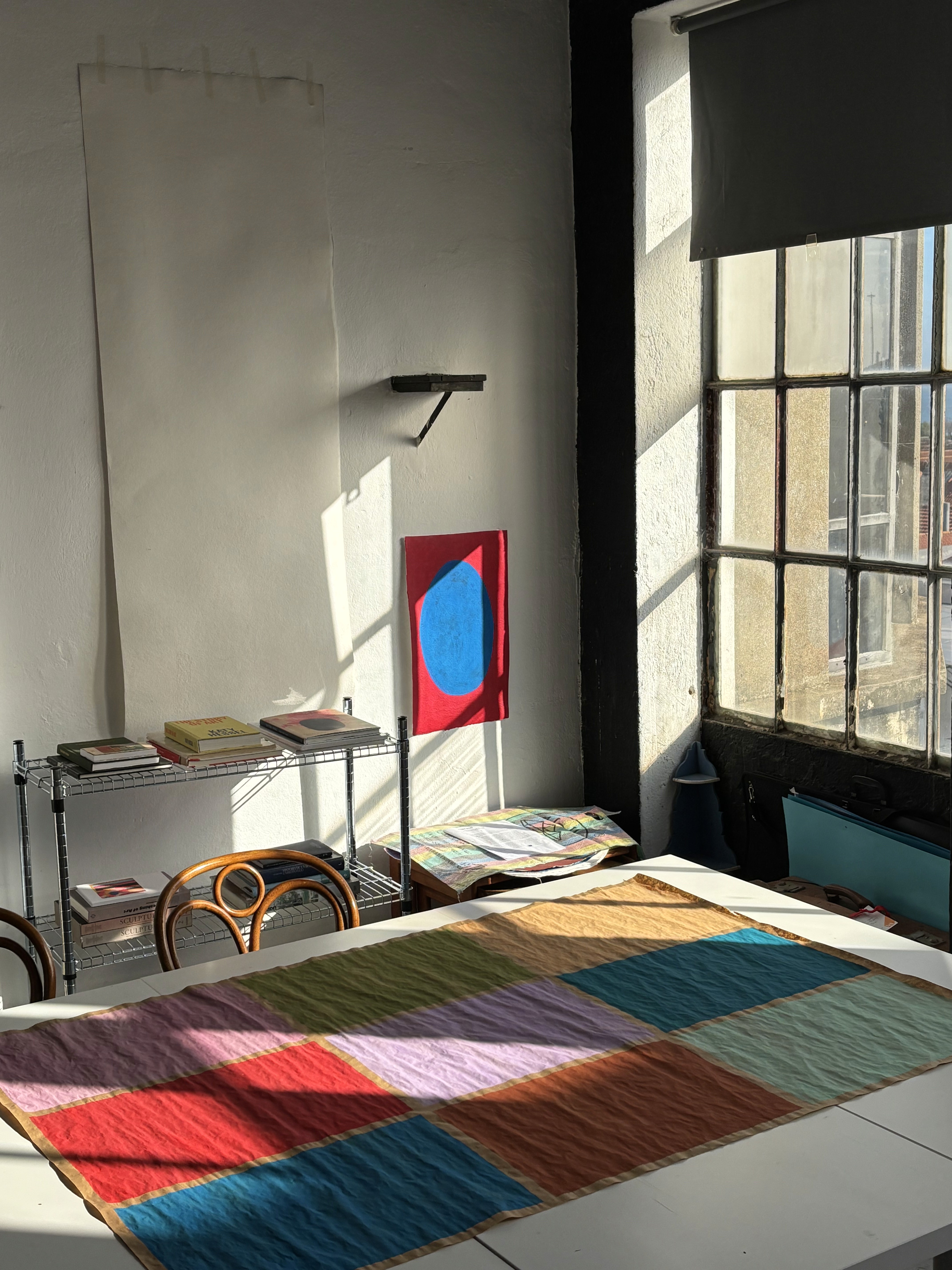
Natalia Sly is an artist based in Lisbon whose work moves between painting, interiors and objects. Born in London and raised in Argentina, she's followed her curiosity through different places and creative disciplines, building a world of bold colors, playful forms and unexpected ideas.
We wanted to talk to Natalia because there's a wonderful sense of freedom and intuition in what she creates and the way she lives. You can feel the connection between everything she does, how creating impacts her life just as much as her life impacts her art. It feels playful and never too serious, yet deeply intuitive and full of intention. There's always a presence of color and light in her world that captures our attention and makes us curious to discover more.
We spoke about making things with a sense of play, letting go of the need to know what something will become, and finding the courage to put an idea into the world. About trusting your instincts, being willing to surprise yourself, and discovering what happens along the way.


I was born in England and then I grew up in Argentina, which was, I think, probably the best thing. Growing up in nature, always traveling around this country with huge landscapes. I think the sensation of scale was something that was embedded as a very young child. I think color, light and scale come from living in South America for sure, not in England.
I studied art history. Before coming here, I had my own art gallery, and so my creative process really was always around the art world.
When I finally moved to Lisbon, which is now ten years ago, I had the opportunity to start with a blank canvas. I didn't know anybody, and there was a lot of freedom in that. I started working on interior design and creative direction projects with my friend Pepi, with whom I created Dora Daar. We were experimenting, working with spaces, art, and architecture, and learning as we went.
Eventually, I started feeling this need to create something that was entirely mine. To find my own voice. That's when I began studying painting, and color became this incredible way of expressing how I see the world.
I think I've been born into it! My mother has always used a lot of color, and I grew up in a very colorful home. I learned so much from watching how she combined things. Color is something that is in my DNA.
I remember getting this rush of excitement when putting together presentations or working with textiles and different colors. Just the act of composing with color made me feel something.
It's always been like a magnet. Whenever I see art, I'm automatically drawn to the use of color. There's no distinctive moment when it started because it's been there since day one really.
I think any creative expression is really about using our voice and showing how we see the world. We all have this unique way of perceiving things, but understanding that voice and feeling comfortable expressing it takes courage.
There's always this tendency to blend in, and standing out can feel quite uncomfortable.
Painting became a safe space for me. I was using geometry and color to express myself without necessarily having to reveal too much. But now I've reached a point where I feel a little too comfortable, and I think I need to push myself again.
It's a continuous process. You find your voice, you become comfortable, and then you need to challenge yourself to go somewhere new.
I think always for sure, nature.
Going out, getting wind in my face, being in the elements. Leaving behind the man-made world and the world of ideas for a moment.
I think it's also important to allow yourself to feel uninspired without immediately trying to fix it. There's so much pressure to constantly be creating something.
Sometimes you just need to step away and let things happen naturally.
I have a piece of land in Portugal where we spend our summers. We put up tents there for a couple of months, and one summer I wanted to create a common space where everyone could gather.
I had this idea to take one of my paintings, which was made up of seven different paintings, and turn it into a huge cushioned floor for the tent. It was supposed to cover an area of about seven by four meters.
But then the tent never arrived!
I had the cushions made, and they ended up being these gigantic cushions that I put outdoors instead. It was a big investment, and at the time I didn't really know what would come of it. But it pushed me outside the format of painting on paper and opened up this completely different world. I think it's interesting to show the world some big crazy idea and have the guts to do it.
I think sometimes it's important to just make something. You never know what it might lead to. There's always a ripple effect.
I think there's been a huge part which is this relationship between doing and thinking of the idea. That bridge between actually doing and just letting things come out, which you have no idea, no control, when they're expressing themselves.
These past five years have been a very interesting time frame of my life, where I've really just cut the crap and started doing.
In doing that, taking my body and putting it to work every day without too much thinking, that has allowed me to gain enough confidence. Because I've seen that I am able, that I am capable of producing something that wasn't there by just thinking about it. It came out even much better.
I think we should just be less fearful and get more into the creative practice, never thinking of the results and just playing more. I'd like to be more playful with my work and just not giving a shit. Not thinking that it's going to look like this or that the ending is going to be the work.
And enjoying the process of everything. The process makes me a much more present person. I'm less thinking of the image, of the identity part. Letting go of the identity of who I think I am and what I represent, and all that stuff, which is the ego.
By getting in there, getting into the practice, losing your mind and getting out of the mind. I think that's the best thing.
Yes! There's a sculpture by a Senegalese artist called Seni Awa Camara that means a lot to me. It's one of those objects that connects so many different moments in my life.
I remember going to an exhibition in Paris and seeing her work for the first time. I felt this immediate connection. You could see how she had channeled something completely higher than herself through these sculptures.
Four or five years later, I traveled to Senegal for an art festival, where we met her sons. They brought one of her huge sculptures to be fired in this amazing bonfire during the night. I couldn't believe I was actually experiencing something I had connected with years earlier in a museum.
And now, years later, I have one of her pieces at home, gifted to me by a friend who worked with her in Dakar.
The same thing happened with tantric paintings in India. I discovered them through a book and had this dream of visiting a family who kept these paintings and would show them to me.
It happened! I was able to buy one, and I have it here.
These moments make me feel like I'm on the right track, like the things I've been manifesting are finding their way into my life.


A candle.
I have to practise and remind myself to look upwards, to observe the world around me from a different perspective. I feel that we are increasingly looking down, mostly at our phones, and this is something that scares me. We live in a real world where light, wind, shadows and beautiful things are happening constantly. Being present, observing and sensing what is happening in each moment, is a gift of being alive. I feel that we often take this for granted and miss the opportunity to be inspired by the simplest of things.
My favourite places to travel to are those where nature, landscapes or culture inspire me. I love places that take me out of my comfort zone and create a sense of edginess that makes me feel alive and connected to the world in a different way. I love experiencing sensations I have never felt before. I remember feeling this particularly when I first travelled to Senegal and India. When it comes to landscapes and nature, Argentina and South America never cease to amaze me with their beauty.
My perfect day would start with my morning routine at home, taking the time to ease into the day peacefully. Then, going to the studio, diving into my creative work and feeling that rush that comes when I’m in a state of flow. I think nothing beats that feeling, and I have to remind myself that it’s not normal for it to happen all the time! Getting lost in the work and enjoying the process is one of the things I value most. A perfect day could end with cooking an exciting meal at home with my son, Jack, and then watching a good movie together.
To eat: SALÓN de Lisboa (my restaurant!)
To shop: A Vida Portuguesa
To read and buy English books: Salted Books
For art and culture: Calouste Gulbenkian Museum
A beach: Ursa Beach
Magic, for me, is when something happens in real life that connects with a dream, a thought or a longing I’ve been carrying. I often feel that our daily routines put us on a track where we move through life in a more automatic state, following familiar patterns without always noticing what is happening around us. But then magic happens, like a glitch in that automaticity: a synchronised moment that opens up another realm, where my subconscious seems to play with the Universe around me. It can be something very small: a chance encounter, a conversation, a word, or an unexpected event that seems to answer a question I’ve been carrying within me. Suddenly, I feel more connected to the world, as if the boundaries between my inner world and the outer world become a little more fluid. I experience these moments as a tap on the shoulder or a wink from the Universe, reminding me that I’m on the right path, or that the direction I’m moving in feels aligned with something deeper within me. For me, magic is about remaining open to these moments, allowing myself to be surprised by life and remembering that there is so much more happening than what we can explain or understand.
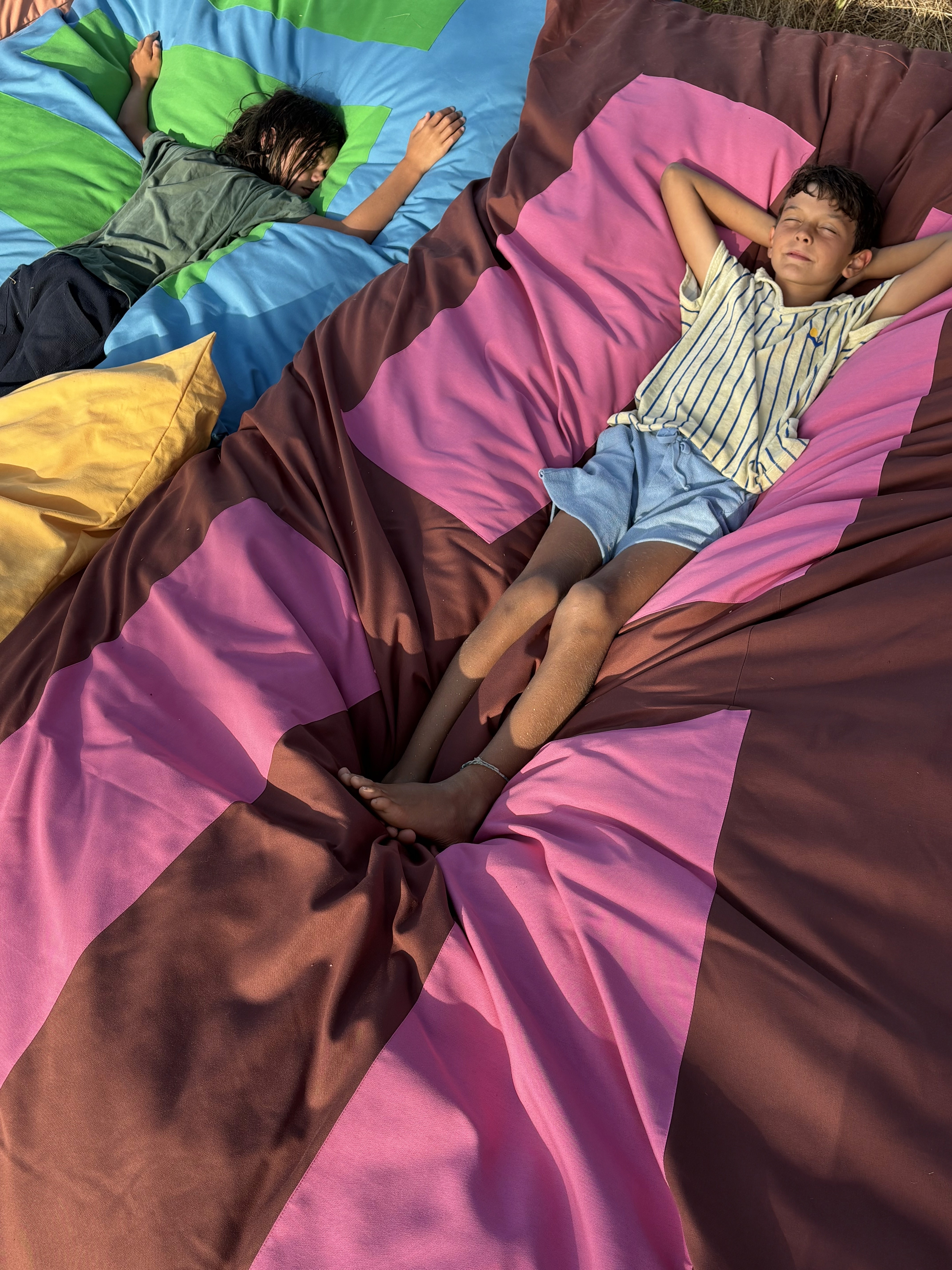


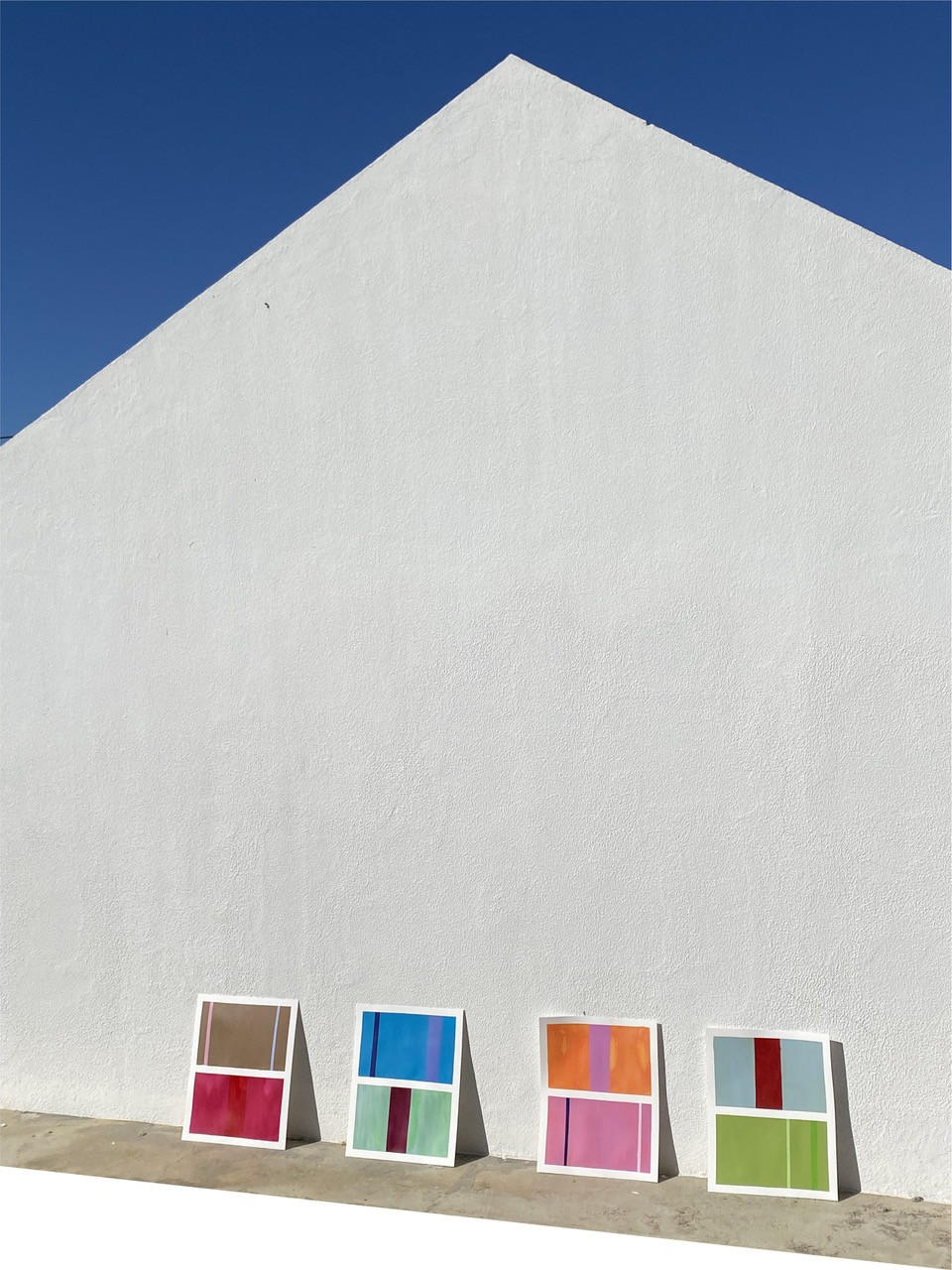


There's something exciting about not knowing exactly where an idea will take you. A painting becomes a cushion, a chance encounter becomes a story you carry for years, and something you once dreamed about suddenly finds its way into your home. So much of life happens in these unexpected connections. And perhaps the more we allow ourselves to experiment, make mistakes and follow our curiosity, the more room we leave for things we couldn't have planned in the first place.
It's fascinating how much time we spend thinking about what we want to do, who we want to become, and how everything is supposed to turn out. As if we could think our way into every answer. But there's something to be said for getting out of our heads and into the world, for making things simply because we feel like making them, and trusting that we'll figure out the rest along the way.
Natalia's stories are a lovely reminder that we don't need to understand every connection or know where everything is going. Sometimes it's enough to pay attention, follow what excites us, and see what happens.
Natalia Sly is an artist, designer and co-founder of Salón de Lisboa in Lisbon. Explore her work at slynat.com and follow along at @natsly and @salondelisboa.
Thank you for being here.